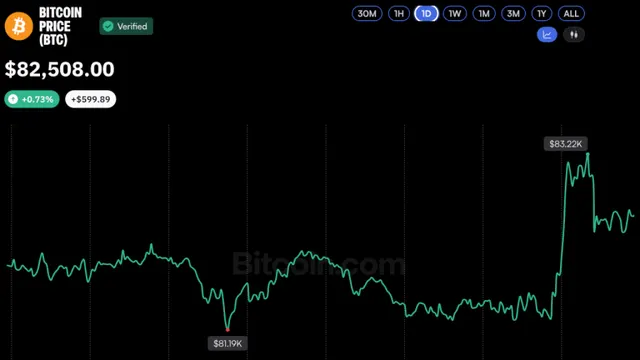
Bitcoin dipped below $81,400 on Tuesday. Despite ongoing market uncertainty, the largest holders of the crypto asset have been stacking up.
According to Santiment, wallets holding between 10 and 10,000 BTC have accumulated around 88,987 units in just one month.
Holders Keep Loading Up
The buying spree began on September 19. The combined holdings of this cohort have now climbed above 13.69 million BTC, reaching a level not seen in the past six months.
Santiment noted that these wallets have historically tracked closely with Bitcoin’s major price movements, and their growing balances suggest large holders are increasing exposure rather than cutting back during volatility.
But accumulation alone does not guarantee a rally. If the trend continues, it could offer support for Bitcoin’s price outlook. Given BTC’s influence on the wider crypto market, steady buying from these holders could also help strengthen confidence.
But growing whale balances do not fully explain Bitcoin’s struggle to break higher. HashKey Senior Researcher Tim Sun explained that rising borrowing costs and narrower valuation premiums have weakened some corporate treasuries’ incentive to keep adding the asset.
“During the last two years, key marginal buyers of Bitcoin mainly came from spot ETFs and corporate Bitcoin treasuries. The latter, in particular, relies heavily on capital market financing conditions for sustained purchasing power. As monetary policy faces renewed tightening pressure and borrowing costs rise, equity valuation premiums for some treasury companies have narrowed, reducing the economic incentive to continually expand Bitcoin holdings through financing. This bears a certain similarity to the recent pressure seen in AI tech stocks.”
Sun said that BTC has still avoided a “sustained, deep drop” while adding that growing long-term investment is helping the market absorb macroeconomic shocks, even as some traditional sources of buying demand lose strength.
Weak Institutional Demand
The pressure on corporate Bitcoin buyers is not the only concern. Another factor weighing on the crypto asset’s buying pressure is the slowdown in ETF demand. Spot BTC exchange-traded funds attracted $526.6 million on Monday, which happens to be their largest daily inflow in nearly a month. The inflows weren’t enough to turn things around, as these funds posted net outflows of $90.57 million so far in October.
On a deeper level, Sun believes that the asset “is gradually transitioning toward a more mature asset-allocation-driven phase.” As investment channels mature, institutional buying will increasingly depend on market liquidity, interest rates, risk budgets, and Bitcoin’s value compared to other major asset classes.