The Sleeper Has Awakened: Pepenardo’s Sleeping Knights Return
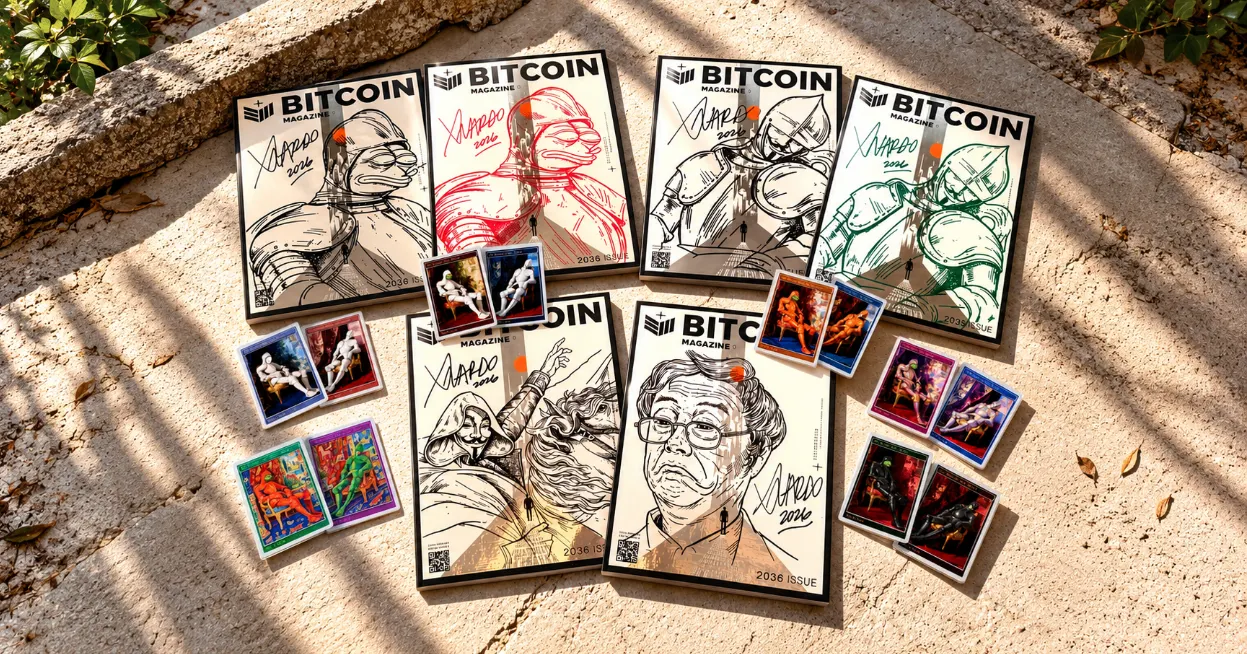
Pepenardo has transformed six copies of Bitcoin Magazine’s 2036 Issue into original artworks, drawing directly onto the covers with a Sharpie. The hand-altered editions feature familiar characters from his visual universe, including the Sleeping Knights, previously exhibited at the BMAG Museum in Nashville and Bitcoin 2026 in Las Vegas. Other imagery includes the masked rider of FAKEGENESIS, Dorian Nakamoto, and Pepe the Frog.
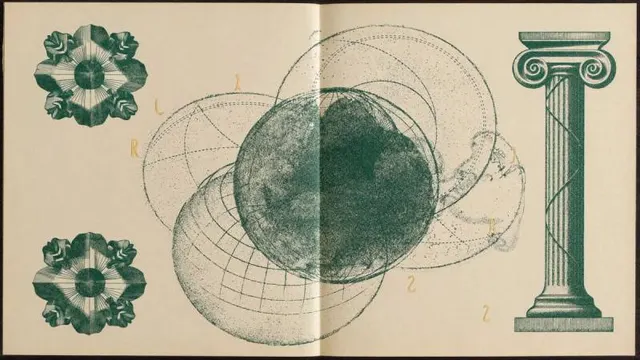
Each magazine features the artist’s signature on its illustrated cover and an additional gold-ink signature on an interior spread reproducing his painting THE DREAMER. Each is paired with two original, one-of-one trading cards created for the collaboration.
The project reflects BTC Inc.’s growing interest in art, publishing, and collectibles, building on Pepenardo’s MEMETIKRON exhibition at Bitcoin 2026, where THE DREAMER (RED KNIGHT) and THE DREAMLESS (GREEN KNIGHT) became highlights of the BMAG auction.
The two oil paintings, each measuring 30 × 39.5 inches, depict reclining knights in red and green armor, referencing financial markets and historical portraiture. Both sold for 0.32698802 BTC (approximately $26,500 each), attracting a combined 197 bids. Their imagery now reappears in artist-made trading cards featuring alternate colorways, remixed compositions, and hand-painted Creator Rare editions inspired by traditional textiles.
Amid a booming trading card market, Pepenardo’s work bridges painting and handheld collectibles, where scarcity, provenance, and variation shape value. His relationship with this market began well before the Sleeping Knights.
In 2023, his painting FAKEGENESIS, a reinterpretation of Jacques-Louis David’s Napoleon Crossing the Alps featuring a masked rider on a green horse, sold at the Bitcoin Conference in Miami for 1.625 BTC. Originally created as a Fake Rares card in 2022, the composition became an early landmark for physical Bitcoin art, demonstrating the growing collector interest in artwork emerging from Bitcoin’s meme culture.
FAKEGENESIS later appeared on the back cover of Bitcoin Magazine, with prints available through the publication’s store. Its return as a hand-drawn magazine cover completes an unusual progression from trading card to painting, printed reproduction, and original collectible.
Bitcoin Magazine itself has a collecting history dating to its first issue in May 2012, co-founded by Mihai Alisie and Vitalik Buterin. At a bitcoin event in London in September 2012, seven copies of the inaugural issue were signed by more than 20 early bitcoin figures. One attracted a winning bid of 7 BTC, although the buyer never completed the purchase or collected the magazine.
Early issues have since become sought-after historical artifacts, with graded copies and rare editions attracting collectors. In 2023, Bitcoin Magazine introduced the Genesis Box, a limited edition of 21 collector’s sets containing the publication’s first 22 issues, each housed in protective acrylic cases.
Much like early exhibition catalogs, first-edition books, and concert posters, Bitcoin Magazine has developed value beyond its original publishing purpose. Pepenardo’s customized covers extend that history, turning the publication itself into a one-of-one artwork.
I spoke with Pepenardo about his paintings, trading cards, and evolving relationship with Bitcoin Magazine, and with Mark Mason, Head of Media at Bitcoin Magazine, about the historical significance of the publication and its growing collector market.
BMAG: This collaboration came together quickly after you noticed the blank space on the cover of the Bitcoin Magazine issue featuring your work. What inspired you to turn these magazines into original artworks, and how do you see them fitting alongside your paintings and trading cards?
Pepenardo: I couldn’t help but notice that welcoming blank space on the cover. It seemed like an obvious place for a drawing. Coincidentally, I came into Bitcoin through watching the energy around trading cards on Counterparty, from 2016 all the way to the present. Hal Finney foreshadowed this ethos in his famous 1993 email titled “Crypto trading cards.” Of course he was talking about digital collectibles, but the principle stays the same. Bitcoin’s history has a magnetic pull on collectibles; people want to hold on to a fragment of such an important modern history. When we look back fifty years from now, the content and the artifacts that came out of the movement will help future generations make sense of Bitcoin’s tremendous timeline.
BMAG: The two knights, THE DREAMER and THE DREAMLESS, began as oil paintings exhibited and sold at Bitcoin 2026 in Las Vegas. They have since appeared in Bitcoin Magazine and now as original trading cards with different variations. How does the meaning of these characters change as they move between painting, publication, and collectible card? What rules guide your remixed versions, and were you surprised by how quickly the cards sold out?
Pepenardo: I was shocked at how quickly they went. I have no words. But it certainly reinforces that what I’m attempting to create and build with my work has some value. Being able to use the trading cards as a way to remix the original works lets me enrich the life of each painting. The mediums are different – oil on canvas for the paintings, various print methods for the trading cards – but the tedious care that goes into executing both is the same.
BMAG: FAKEGENESIS became a defining work in your career, moving from Fake Rares into an original painting that attracted significant attention at Bitcoin 2023 in Miami. Looking back, what do you remember about that moment, and how did it change your practice and the audience for your work?
Pepenardo: FAKEGENESIS will always be the pivotal work that showed me how I should properly approach my art. I knew that even before it sold. It is a painting that embeds the tropes of Bitcoin’s ethos without being too obvious. Art within the context of Bitcoin shouldn’t have to throw a big B at you all the time; it should give you the fiery sensation of standing inside a new history being built. My hope is that it is remembered as a work that represents an entire movement – onwards and upwards.
BMAG: Bitcoin Magazine’s earliest issues have become historical artifacts in their own right, from signed copies of Issue 1 and graded editions to the Genesis Box collection. Even figures like Michael Saylor have signed covers featuring themselves for charity auctions. What gives these publications their enduring collectible value, and how do you see artist-customized covers like Pepenardo’s fitting into that history?
Mark Mason: For over a decade, Bitcoin Magazine has documented the evolution of Bitcoin, from its early technical developments to the people and culture surrounding it. We see each physical issue as a time capsule, capturing a particular moment in Bitcoin’s journey toward hyperbitcoinization.
One of the biggest factors driving their collectible value is that we never reprint past editions. Each issue has a limited print run, creating a finite supply that has made early editions, graded copies, and signed covers increasingly sought after by collectors.
Bitcoin has always existed at the intersection of technology, economics, and culture. Artist-customized covers like Pepenardo’s take that relationship a step further, transforming an already collectible publication into an original artwork. It’s an extension of what Bitcoin Magazine has become: both a record of Bitcoin’s history and an artifact of that history itself.
Pepenardo’s custom magazine covers and trading card sets sold out shortly after launch, with all six one-of-one editions finding collectors. Additional works remain available, including MASTER CUTS OUT THE STONE (after Hemessen), the centerpiece painting from Pepenardo’s MEMETIKRON exhibition, which traveled from the BMAG Museum in Nashville to Bitcoin 2026 in Las Vegas.
Collectors can also explore FAKEGENESIS prints and the Genesis Box, a limited-edition collector’s set preserving the publication’s first 22 issues from 2012–2014.
The Bitcoin Museum & Art Gallery (BMAG) organizes international exhibitions, auctions, and artist collaborations exploring Bitcoin and its cultural implications. Explore available works from Curtis William Readel’s exhibition Paper Money, along with additional prints, original artworks, and collectibles.
BMAG returns to Bitcoin Amsterdam, November 4–6, 2026, featuring European artists exploring money, power, and Bitcoin. Read more in The Architecture of Money and The Undercurrent.