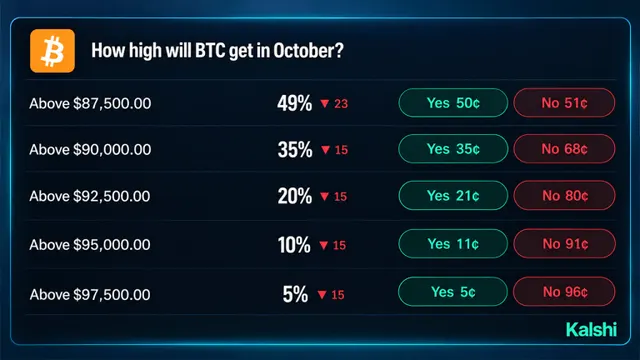
The 10-year US Treasury yield topped 5.3% this month, its highest since 2002, so Bitcoin (BTC), which pays no yield, now competes with a government-backed return above 5%.
The catch is that yields are rising on inflation and debt worries rather than weakening growth, which could make the move harder for risk assets to shrug off.
Why Does a Safer Payout Make Bitcoin Harder to Justify?
Bitcoin offers no interest or dividends, so investors profit only if its price rises. Meanwhile, a Treasury note now pays more than 5% with almost no default risk, so buyers need a bigger expected gain to hold Bitcoin instead.
Valuation math adds a second layer. Higher yields raise the rate used to discount future gains, so those gains are worth less today, and assets without cash flows, such as crypto, can be sensitive to that logic.
Money is already flowing into bonds. Bond ETFs have drawn a record $469 billion so far this year through September.
How High Can Yields Climb Before Risk Assets Crack?
The 10-year yield has climbed about 1.2 percentage points in 2026 and touched 5.34% earlier this month.
10-year yields sit comfortably over 5%. Source: CNBC
Dan Ivascyn, chief investment officer at bond manager Pimco, told the Financial Times the yield could reach 6%, and that readings of 5.5% or more would probably produce
“some decent weakness in risk markets, both credit and equity” Dan Ivascyn, Reuters
Bitcoin’s direction increasingly hinges on the US bond market, though liquidity and fund flows can offset rate pressure.
Still, the squeeze may outlast this month’s moves. A Bloomberg video explainer notes that AI companies’ debt sales now compete with Treasury borrowing for investor cash. Investors are already rethinking the 60/40 portfolio, and any asset that pays nothing must keep beating a 5% Treasury.